Introduction
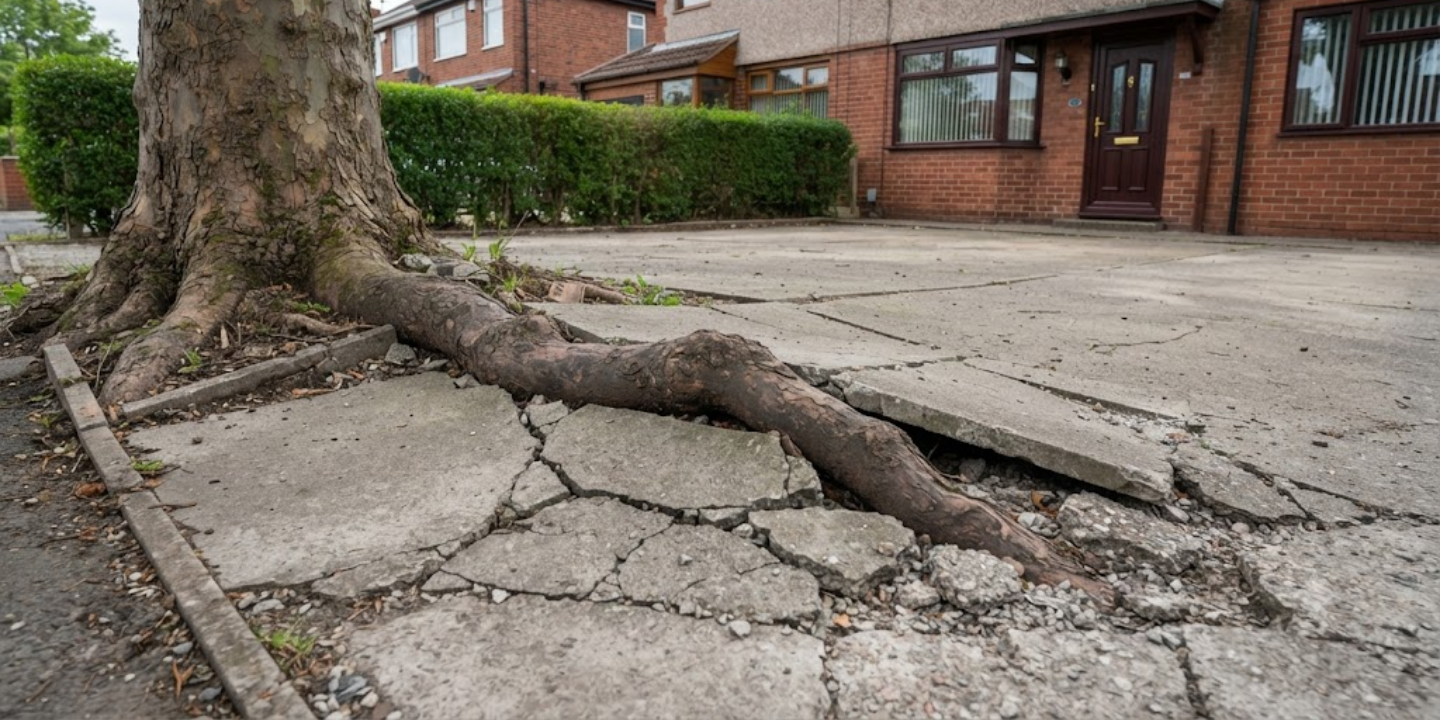
A raised paving slab you keep catching your foot on. A driveway with a crack tracking straight back toward the base of a tree. Or a patio that’s started to slope in one corner over the last couple of summers. This is a very common thing we’re called out for across Preston, Leyland, and the wider Lancashire area, and it’s usually a much more straightforward problem than homeowners initially fear, provided it’s dealt with properly rather than patched over and ignored.
It’s worth saying upfront that this is a different issue from tree-related subsidence, which affects the foundations of a building itself. If you’re dealing with cracking walls or doors that stick, that’s a more serious situation we cover in detail in our guide, Understanding Tree Related Subsidence. This guide is specifically about roots physically lifting or cracking hard surfaces like driveways, patios, and paths, which is a much more common, although generally lower in risk, but still one worth understanding properly before reaching out for a quick fix to your problems.
Why Roots Lift Paving in the First Place
Tree roots don’t grow into hard surfaces to be destructive, they’re simply following the path of least resistance to the oxygen, moisture, and nutrients they need. It’s a common misconception that roots seek out water pipes or driveways with any kind of intent; in reality, a root grows wherever conditions are easiest, and a well-drained, unobstructed strip of ground running under a driveway or patio is often exactly that. Understanding this is genuinely useful, because it means the fix usually isn’t about punishing or removing the tree, it’s about understanding why the roots ended up there in the first place, and addressing that directly.
- Roots prefer the top 30cm of soil. The majority of a tree’s root system, and almost all of its fine, water-absorbing roots, sit in the upper layers of soil where oxygen levels are highest. This is exactly the depth most driveways and patios are laid at.
- Hard surfaces compact the soil beneath them, which pushes roots to grow along the underside of the slab or tarmac rather than beneath it, since compacted soil below is often too oxygen-poor for roots to thrive in.
- As roots thicken with age, they physically displace whatever is above them. This is straightforward mechanical force where a root that was a few centimetres thick when the driveway was laid, can become many times that width over a couple of decades, and something has to give.
- Species matters enormously. Trees with naturally shallow, spreading root systems such as willow, poplar, and silver birch, cause this kind of surface damage far more often and far sooner than deeper-rooting species like oak.
None of this means every tree near a hard surface is a ticking time bomb as plenty of trees sit happily beside driveways for decades without causing any problems at all. It depends on the species, the age and size of the tree relative to when the surface was laid, and how much room the roots have had to spread elsewhere. What it does mean is that lifting and cracking, when it does happen, has a straightforward physical explanation rather than being random bad luck, which is exactly why it responds well to the right fix.
Early Warning Signs to Look Out For
The good news with this kind of damage is that it rarely happens overnight. Root-related lifting is a gradual, progressive process, which means there’s usually a window of weeks or months where the early signs are visible but the damage is still minor and cheap to put right. Knowing what to look for and checking on it every so often, rather than only noticing once you’ve tripped over it makes a real difference to how straightforward the eventual fix turns out to be.
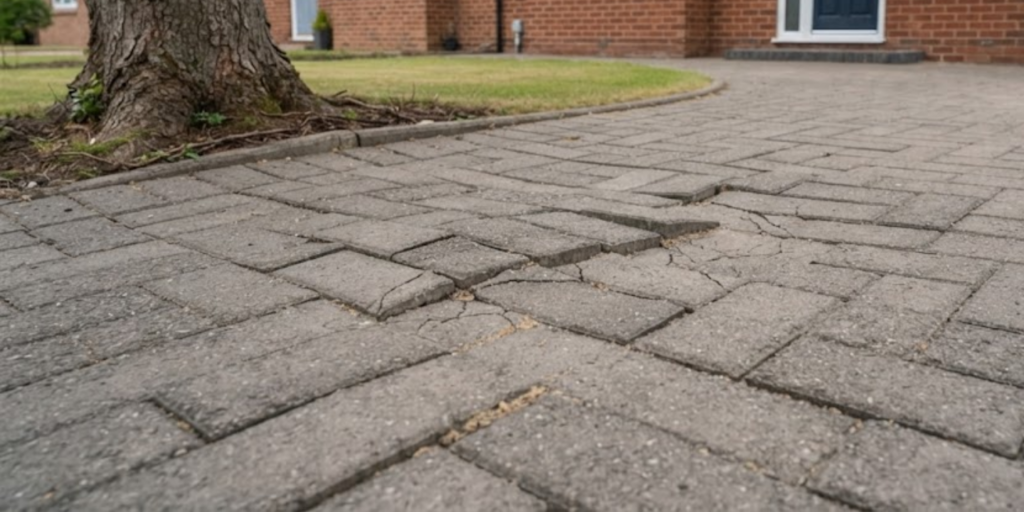
- Hairline cracks appearing in a driveway or patio slab, particularly ones that seem to radiate outward from a specific point.
- A slab or paving block sitting slightly raised, even by a few millimetres is often the very first physical sign, well before cracking becomes obvious.
- Gaps opening up between paving blocks that weren’t there when the surface was laid.
- Tarmac rippling in a line, often tracking back toward the trunk of a nearby tree.
- Uneven pooling of water after rain, where a surface that used to drain flat now holds puddles in new spots.
- A visible root breaking the surface at the edge of a lawn or border near the affected area is a useful confirmation, though its absence doesn’t rule roots out, since much of the damage happens below the visible root.
Catching this early matters more than most homeowners realise. A hairline crack or a single slightly raised paving block is a straightforward, low-cost fix, often limited to root pruning around one small section and relaying a slab or two. Left for a year or two longer, the same root keeps thickening, the crack keeps widening, and what started as a cosmetic issue can turn into a driveway that’s heaved several centimetres, broken up structurally, and now needs a much larger area lifted, a root barrier installed, and the surface relaid properly. The work required doesn’t scale gradually with time, it tends to jump in cost once a problem moves from surface crack to structural heave, so there’s a real financial incentive to deal with this at the first sign rather than waiting to see if it settles down on its own.
What NOT to Do
Before getting into how we actually approach these jobs, it’s worth being upfront about a few things we see homeowners try before calling us, usually with good intentions, but occasionally making the situation harder to resolve properly.
- Don’t just cut through the root yourself and hope for the best. Cutting a root without knowing its size, how much of the tree’s root system it represents, or whether the tree is protected by a Tree Preservation Order can destabilise the tree, encourage decay to enter through the wound, or in the worst cases put you in breach of TPO legislation without realising it.
- Don’t simply patch the surface and move on. Filling a crack or relaying a single slab without addressing the root underneath almost always means the same problem reappears within a year or two, usually worse than before.
- Don’t assume the answer is always to fell the tree. For most driveway and patio lifting cases, removing the offending root, or in more serious cases, a proportion of the root system, guided by a proper assessment resolves the issue without needing to lose the tree entirely.
The common thread running through all three of these is the same. A lifted slab is a symptom, not the actual problem, and treating the symptom without understanding the cause tends to either not work, cost more in the long run, or create a completely unnecessary legal or arboricultural headache. A short, proper assessment up front avoids all three.
How We Approach These Cases
Every driveway or patio lifting case we’re called out to gets the same structured approach, regardless of how minor or major the damage looks on the surface. The steps below aren’t about turning a simple job into a complicated one, they’re about making sure the fix we recommend is the right one first time, rather than a guess that needs redoing in a couple of years.
- Confirm the cause. Not every lifted slab is caused by a tree as ground settlement, poor original sub-base preparation, and frost heave can all produce similar symptoms. We start by confirming roots are actually responsible before recommending any tree work.
- Assess the tree’s overall health and root spread. This determines how much of the root system can be safely removed without compromising the tree’s stability or long-term health. There are recognised limits to how much root mass a tree can lose and still remain safe and healthy.
- Check protection status. If the tree is covered by a Tree Preservation Order or sits in a conservation area, root pruning can still count as work requiring consent, so this gets checked before anything is cut. Our Tree Surveys and TPO Applications service handles this where needed.
- Recommend a proportionate fix, which typically falls into one of a few categories:
- Selective root pruning, removing only the specific root causing the problem, carried out to minimise stress on the tree.
- Root barrier installation, physically redirecting future root growth away from the repaired surface. Most effective when installed alongside a repair rather than as a standalone fix on its own.
- Surface adjustment, such as relaying the affected area on a flexible, permeable paving system that can better tolerate minor future movement, rather than a rigid slab or poured surface.
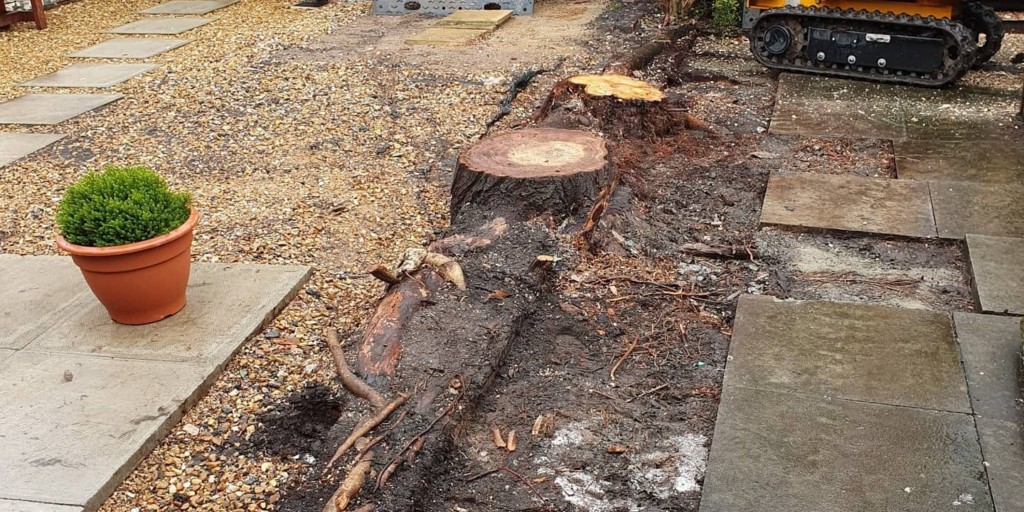
- Stump and root removal, where a problem tree or an old stump is the root cause (often literally) and removal is the more sensible long-term option. If a stump is involved, our stump grinding service is worth reading up on as a poorly removed stump can leave a surprising amount of live root behind, which keeps causing the same lifting problem for years afterward.
Which of these routes is right depends entirely on the specific tree, the extent of the damage, and what’s realistic for the site. There’s no single correct answer that applies to every driveway or patio. What matters is that the decision is based on an actual assessment of the tree and the root causing the problem, not a default reach for whichever fix happens to be quickest. Handled properly, most cases end with a repaired surface, a healthy tree still standing, and a solution that’s genuinely built to last rather than one that quietly starts lifting again in a couple of summers’ time.
Dealing With a Lifted Driveway or Patio?
If tree roots are lifting or cracking a hard surface on your property, get in touch with a photo and the tree’s approximate location relative to the damage. We’ll tell you honestly whether this is a straightforward root pruning job or something that needs a fuller assessment.
Frequently Asked Questions (FAQ):
Not usually, provided the amount of root removed is proportionate to the size and health of the tree, and the work is carried out correctly. This is exactly why a proper assessment matters rather than just removing whatever is visible.
It depends heavily on the extent of the damage and whether root barriers or surface replacement are needed alongside the tree work itself. Our guide on how much do tree surgeons charge gives a general sense of pricing for the tree side of the job.
No, this guide covers direct physical displacement of paving by root growth. Subsidence involves clay soil shrinkage affecting a building’s actual foundations, which is a more serious issue covered in our guide on tree-related subsidence.
Yes, this is by far the easiest stage to prevent the problem. Choosing species with less aggressive root systems, planting further from hard surfaces than feels necessary at first, and installing root barriers at planting stage all significantly reduce the risk of this becoming an issue a decade down the line.
Often, yes. Root pruning can constitute as work on a protected tree under TPO rules, even where no part of the canopy is touched, so it’s worth checking status before any work begins.
References:
https://www.treecareextraordinaire.co.uk/tree-roots-subsidence/
https://www.gov.uk/guidance/tree-preservation-orders-and-trees-in-conservation-areas
https://www.rics.org/consumer-guides/subsidence
https://www.trees.org.uk/
https://www.tdag.org.uk/trees-in-hard-landscapes.html