Introduction
For a lot of homeowners across Preston, Leyland, and the wider South Ribble area, tree root problems don’t arrive as a single dramatic event, they creep in slowly, and by the time they’re noticed, there’s usually a genuine question mark over whether the tree is actually to blame. This is one of the most misunderstood areas of tree ownership.
Some homeowners panic and want a tree removed the moment a crack appears, not realising that felling the wrong tree at the wrong time can sometimes make ground movement worse, not better. Others ignore early warning signs for years because nothing looks obviously wrong above ground. Both approaches carry risk.
This guide sets out, in plain terms, how tree roots actually interact with foundations and drainage, what the real warning signs look like, and critically, why this is a decision that needs a genuinely qualified arborist and, in most cases, a structural engineer working together, not a guess made over the garden fence.
How Tree Roots Actually Cause Damage
There are two quite different mechanisms at play here, and confusing them is where most bad decisions start.
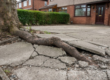
- Direct physical damage: Roots can grow into existing cracks or joints in drains, driveways, or boundary walls, gradually widening them as the root thickens. This is mechanical damage with the root physically displacing material, and it’s the easier of the two problems to diagnose and fix.
- Clay shrinkage subsidence: This is the more serious mechanism, and it’s specific to shrinkable clay soils. Thirsty tree species draw large volumes of water out of the ground during the growing season. On clay-rich soil, this moisture loss causes the clay itself to shrink in volume, and the ground beneath a building’s foundations can subside as a result. This is the process behind the vast majority of tree-related subsidence claims in the UK.
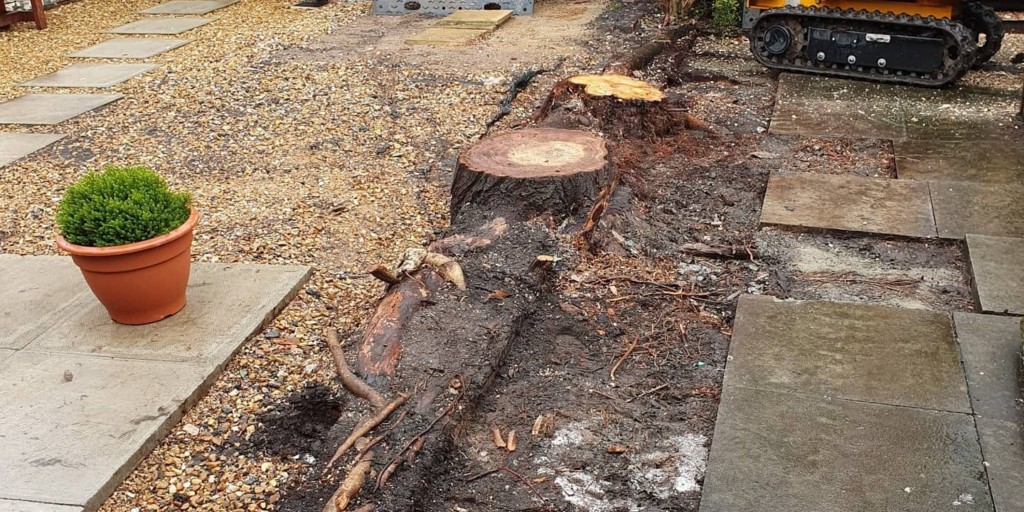
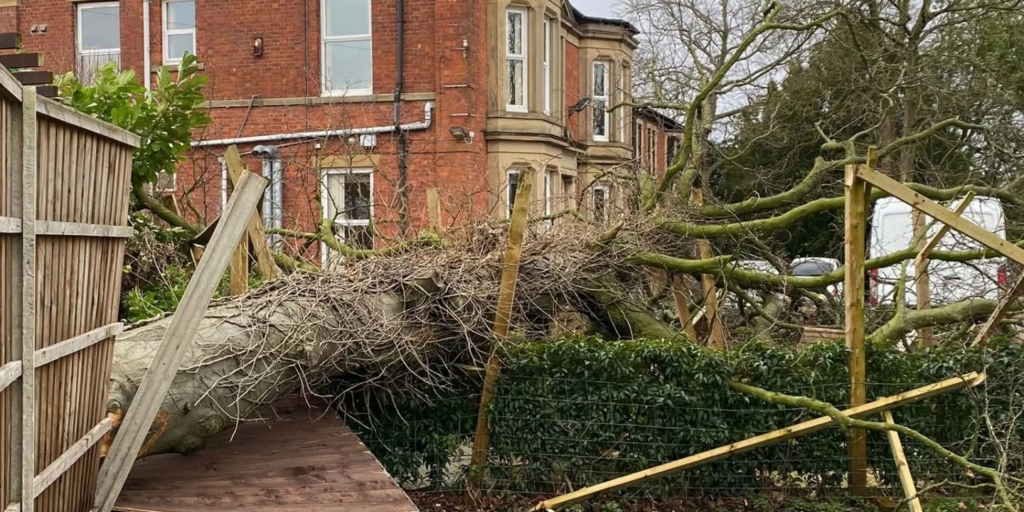
- Heave – the opposite problem: This is the mechanism most homeowners have never heard of, and it’s the reason “just cut it down” is genuinely bad advice in some situations. If a mature tree has been drying out clay soil for decades and is then suddenly removed, the clay gradually rehydrates and swells back towards its original volume over the following 10–20 years. That swelling can lift and crack foundations just as damagingly as subsidence can, sometimes worse.
Warning Signs Worth Taking Seriously
Not every crack is a tree problem, and not every tree near a house is a risk. That said, there’s a fairly consistent pattern professionals look for:
- Diagonal cracking, typically following the line of mortar joints rather than running straight through bricks, most commonly at corners of the building or around door and window openings.
- Seasonal movement, cracks that visibly widen during a dry summer and partially close up again over winter are a strong indicator of clay shrinkage rather than a one-off structural issue.
- Doors and windows sticking intermittently through the year, particularly if this coincides with dry spells.
- Recurring drain blockages, especially if a drain camera survey shows root ingress at a joint.
- A mature, high-water-demand tree, oak, poplar, willow, or a large ash or lime — growing closer to the property than its own mature height, on a clay or clay-rich soil.
- New cracking appearing shortly after a tree has been removed nearby, this points towards heave rather than subsidence, and needs a different response entirely.
If you’re seeing a combination of these, particularly the seasonal pattern in point two, it’s worth getting a proper assessment rather than watching and waiting.
Why Local Lancashire Knowledge Matters
A huge amount of the advice available online about tree-related subsidence is written with London and the South East in mind, where London Clay and Gault Clay are highly shrinkable and subsidence claims are extremely common. Lancashire’s geology is generally quite different. Much of our area sits on boulder clay and glacial till, which is classed as low “shrinkability” clay, meaningfully less prone to the dramatic seasonal volume changes seen in the South East.
That doesn’t mean Lancashire properties are immune, actually far from it. It means the risk calculation is different, and generic national advice can lead homeowners here to either overreact to a tree that poses very little real risk, or underestimate a genuine problem on a property with older, shallower Victorian or Edwardian foundations. This is exactly the kind of judgement call where having someone who knows the ground conditions across Preston, Leyland, Chorley, and the surrounding areas, rather than a generic online calculator actually matters.
The British Geological Survey’s GeoSure dataset gives a useful starting point for checking shrink-swell risk by postcode, but it’s not a substitute for a site-specific assessment.
What NOT to Do
Before getting into the right process, it’s worth being direct about a few common mistakes we see regularly:
- Don’t remove a mature tree the moment a crack appears. As covered above, felling an established tree that’s been managing soil moisture for decades can trigger heave, which may cause more damage than the original problem.
- Don’t rely on root barriers as a fix for an existing subsidence problem. NHBC guidance is explicit that root barriers are not considered a reliable means of controlling established subsidence risk in shrinkable soils, they’re a planning tool for new development, not a retrofit solution.
- Don’t skip the diagnosis stage. Cutting a tree back or removing it without proper investigation such as soil testing, crack monitoring, or sometimes drain CCTV surveys, means you’re guessing at the cause, which can lead to unnecessary tree loss or a repair that doesn’t actually solve the problem.
- Don’t assume your insurer will simply pay for tree removal. Subsidence investigations typically take months, sometimes over a year, and insurers will usually want clear evidence the tree is the cause before authorising removal at their expense.
Our Process for Root and Subsidence Cases
When we’re brought in on a case involving suspected root damage or subsidence, we follow a structured process rather than jumping straight to a chainsaw:
- Site assessment and tree identification: Confirming species, age, and condition of any trees within influence range of the affected structure, and mapping this against the property’s construction date and likely foundation type.
- Root investigation where necessary: In some cases this means careful, non-destructive trial pits to establish whether roots from the suspected tree are actually present near the foundation, rather than assuming based on proximity alone.
- Liaison with structural engineers and loss adjusters: For anything beyond minor cosmetic cracking, we work alongside the structural engineer or insurer’s appointed expert rather than acting in isolation, since the ultimate decision on remedial works sits with that investigation.
- Proportionate recommendations: Depending on findings, this might mean a managed crown reduction to reduce a tree’s water demand rather than removal, a phased removal with monitoring for heave risk, or in some cases confirming the tree isn’t the actual cause at all.
- Documentation throughout: Every stage is recorded, which matters enormously if the case ends up supporting an insurance claim or a property sale further down the line.
Real Experience, Not Just Theory
This isn’t abstract guidance, it reflects work we’ve actually carried out across the region. We’ve diagnosed and managed root-related decay issues on mature trees for both Preston City Council and private clients, including a heavily decayed beech affecting a Preston Cemetery site and a similarly affected mature beech at Moor Park, both suffering from root-decaying fungus (Meripilus giganteus) that required careful judgement on how much of the tree’s structure and root system could safely be retained.
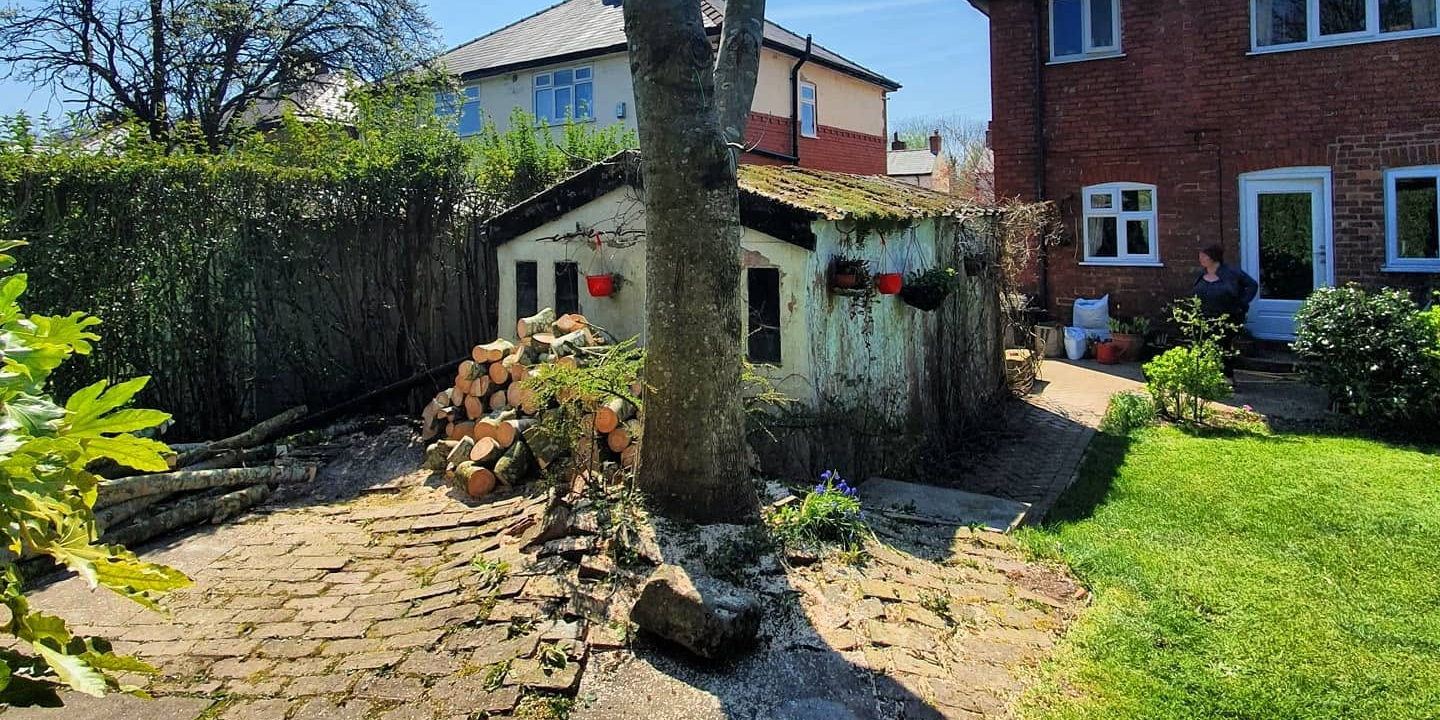
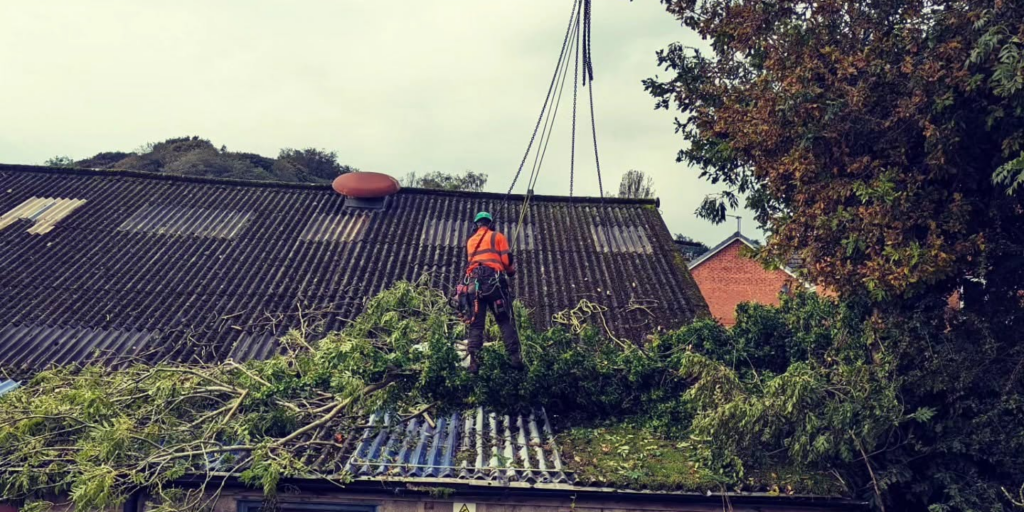
We’ve also handled full storm-damage and root-ball removal work at sites like Lostock Grove Care Home, where root plate condition was central to deciding how the job was carried out safely. This kind of hands-on root and soil assessment work is exactly the background that informs how we approach subsidence and drain-related cases.
If you’re dealing with a suspected root issue, our tree survey service is the right starting point, it’s built around exactly this kind of structured, documented assessment. Where removal does turn out to be the right answer, our tree removal service covers everything from a straightforward garden tree through to complex, restricted-access sites.
Concerned About a Tree Near Your Property?
If you’re seeing cracking, recurring drain issues, or you’ve simply been told by a surveyor or insurer that a nearby tree needs looking at, get in touch with details of the property and what you’ve noticed. We’ll talk through whether a formal tree survey is the right next step, and can work alongside your insurer or structural engineer where needed.
Frequently Asked Questions (FAQ)
Most UK buildings insurance policies cover subsidence as standard, but insurers will generally require a proper investigation, including monitoring and sometimes trial pits before authorising tree removal or underpinning at their cost. It’s worth notifying your insurer as soon as subsidence is suspected rather than waiting.
Not automatically. If the tree isn’t on shrinkable clay, isn’t a high-water-demand species, and there’s no evidence of movement, removal may create more risk (through heave) than it solves. This is a case-by-case decision, not a blanket rule.
It depends on the species, the soil type, and the age and depth of your foundations. There’s no single safe distance that applies everywhere. NHBC guidance uses tables based on tree height, species water demand, and soil “shrinkability” rather than a fixed number of metres.
Yes. While clay shrinkage subsidence is soil-specific, physical root ingress into cracked or poorly jointed drainpipes can happen on almost any soil type, particularly with older clay drainage systems.
This is worth flagging to a structural engineer, especially if the tree was large and removed within the last 10–20 years, since heave risk can still be developing even without a visible tree on site today.
References
https://www.newbuildinspections.com/knowledgebase/nhbc-standards-chapter-4-2-building-near-trees
https://www.rics.org/consumer-guides/subsidence
https://www.istructe.org/resources/guidance/subsidence/
https://www.bgs.ac.uk/